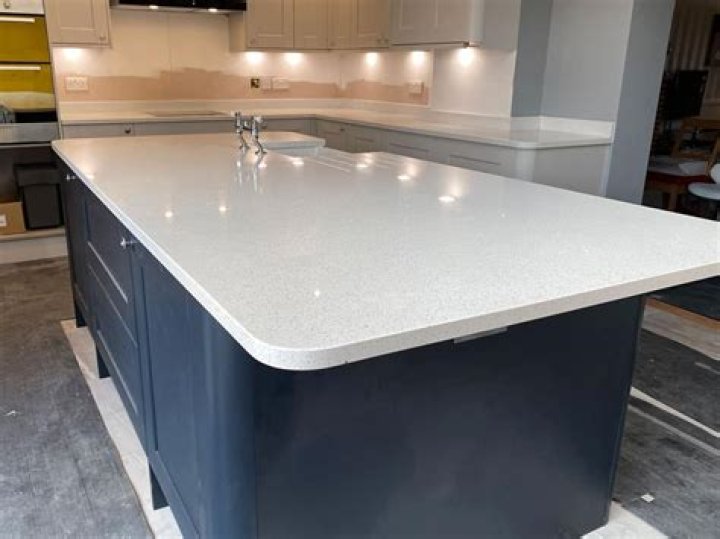
Yes, you can move a kitchen island. If your island is home to a sink, stove, or electrical outlet, the move will be much more complicated, and you will likely need the help of a professional to remove and relocate plumbing, electricity, and possibly gas.
Is it possible to move a kitchen island?
Yes, you can move a kitchen island. If your island is home to a sink, stove, or electrical outlet, the move will be much more complicated, and you will likely need the help of a professional to remove and relocate plumbing, electricity, and possibly gas.
Are kitchen islands attached to the floor?
Kitchen islands are attached to the floor to secure them into place and prevent them from shifting around or falling over. Other than store-bought, movable islands, a kitchen island is meant to be a permanent fixture in the kitchen just like the other base cabinets, so they should be anchored to the ground.
How hard is it to relocate a kitchen island?
Kitchen islands can be moved if it’s on wheels. If the island is not on wheels and has a kitchen sink, stove, or electrically wired in, you may need a professional to help move the kitchen island. This will require additional plumbing and electrical work.Can an island be moved?
Islands are “mountains” on the ocean floor. They don’t float, they’re attached to the Earth. You can move them with tectonic activity; earthquakes, volcanos, plate tectonics; just like mountains.
Can I make an island out of base cabinets?
Yes! You can use base cabinets for a kitchen island. Base cabinets come in several different heights and many types and styles so you can create a custom island at a fraction of the price.
Can a kitchen island tip over?
The countertop can overhang the cabinet to allow for leg room. With this type of cantilevered countertop, it is usually best to have some kind of braces supporting the counter overhang. … Without the correct support, a countertop could be unstable and might even tip, if someone were to sit on it.
How much does it cost to remove a kitchen island?
If you plan on completely gutting your kitchen to prepare for a remodel, expect to pay between $1,000 and $3,000 for small kitchen demolition. If you plan to completely gut a large kitchen, you can expect to pay upwards of $10,000 or more in some cases.How is island attached to floor?
Wood cleats are the best way to anchor the kitchen island to the floor. Wood cleats might be 4×4 woodblocks for the interior corners of the cabinets. Or you can cut eight to 12 inch 2×4 boards, screw them to the subfloor to form corners that the cabinet fits over, securing it to the floor.
How far should an island be from the counter?Distance Between Island and Counter Recommended distance between kitchen work areas, which can include both perimeter countertops and kitchen islands: 42 inches minimum in a single-cook kitchen. 48 inches minimum in a kitchen where more than one cook may be working.
Article first time published onHow do I run electricity to my kitchen island?
How to Run Electricity to a Kitchen Island. You’ll have to cut a trench in the concrete for a PVC conduit, which will carry the electrical cable under the floor. The best spot for that trench will be underneath a flooring strip that runs perpendicular from the nearest wall to the spot where your island will be.
Should your kitchen island match your cabinets?
Your kitchen island does not have to match. Although matching an island to surrounding cabinets and countertops creates symmetry within a kitchen, using different cabinet colors or different countertops can turn an island into a beautiful focal point that complements the rest of your kitchen.
How can an island move?
Yes, the land really does go all the way down. An island is mostly rock, so if it didn’t go all the way down it would sink! The exception is ice-bergs, which do float, ice being less dense than water.
Why do Islands not float away?
Islands are not floating at all. They are actually mountains or volcanos that are mostly underwater. Their bases are connected to the sea floor. If an island does disappear under the ocean, it’s because the land underneath has moved or the bottom of the volcano has broken apart.
Do floating islands really exist?
But floating islands do indeed exist on six of the seven continents and sometimes in the oceans between them. These islands are kept buoyant by the light spongy tissues of certain aquatic plants, by gases released into their soil by decomposing vegetation, or by both these forces.
What is the overhang on kitchen island?
The standard overhang of an island countertop — on the side designed to sit at and tuck stools underneath — is 12 inches. If you plan to extend the counter farther, you need to add supports such as legs, or wood corbels or metal L-brackets that extend half the overhang’s distance.
Does an island need to be attached to the floor?
To prevent them from moving or toppling over while in use, kitchen islands are connected to the floor. Because kitchen island cabinets cannot be fastened to a wall, a 2′′ x 4′′ is nailed to the floor, and the cabinet is secured by the 2′′ x 4′′.
How do you finish the back of a kitchen island?
- Add faux cabinet doors. Image Credit: Studio McGee. …
- Or, keep it real. Image Credit: Roundhouse Design. …
- Match the flooring. …
- Clad it with tile. …
- Go dark … …
- Finish with plywood. …
- Affix shiplap. …
- Install simple flat panels.
Where should a kitchen island be placed?
Pick a prime spot: The center of the room is not always the ideal place for an island, depending on your use of it. An island designed for food prep should be situated near outlets and appliances, while an island designed for cleanup should be situated near the dishwasher and garbage.
How do you secure island legs to the floor?
Turn the bolt all the way down until the head of the bolt touches the top of the insert, then insert the end of the bolt into the hole in the leg, and use a ratchet to tighten the fitting down into the hole. Remove the bolt from the fitting, and you will then have a fitting installed into the bottom of the leg.
How do you move a granite countertop without breaking it?
Transporting Granite It’s important to always carry the countertops in a vertical position, never horizontally flat, to avoid cracking or breaking the stone. To transport granite slabs, carry them on edge in an A-frame rack, the way glass is carried. If needed, you can make a simple rack from 2x4s.
How do you move heavy granite?
You should always transport granite slabs vertically. Similar to glass panels, if you transport it horizontally, you run the risk of breaking it in smaller pieces. Use A-frames with tight-gripping clamps and straps when transporting the slab with a vehicle.
How do you move a countertop?
- Carry the countertops vertically. Not flat or horizontally.
- Don’t drag or push the countertop as you will crack it. …
- Move the countertops one way—don’t have rest stops on your way as you increase the pieces’ chances of breaking if you keep stopping in different areas.
Do kitchen islands add value?
While there any many improvements that can be undertaken in the kitchen — from custom kitchen cabinets to modernized fixtures, to tiled backsplash — the inclusion of a kitchen island can create much more value for your family than simply adding storage and prep space.
Is a kitchen island worth it?
The advantages to a kitchen island are many: You get more counter space, more storage, an eating area, and possibly room for an appliance or small work sink. … On the other hand, you have the additional cost, as noted above, plus an island can disrupt the classic triangle layout of sink/range/refrigerator.
How much does it cost to relocate cabinets?
Removal & Disposal$300 – $500New Cabinets$100 – $1,200 per linear footLabor$50 – $450 per linear foot
What is a good size kitchen island?
Size and Placement At minimum, an island should be 4 feet long and a little more than 2 feet deep, but it must also have room for people to move and work around it. Unless your kitchen is at least 8 feet deep and more than 12 feet long, don’t even think about an island.
Is it better to have sink in island?
Sinks tend to attract clutter, dirty dishes, and, often, become an area for clean, drying dishes. … One way to keep a sink in the island while avoiding mess is to put the main, cleaning sink against a window or wall and put a small prep sink in the island. This will promote a cleaner, sleeker-looking island.
How big does your kitchen need to be to have an island?
A kitchen island should be at minimum 4 feet long by 2 feet wide in order to be useful, but ideally larger. If you have a small kitchen and don’t have enough room to allow this, we recommend a mobile butcher block station or a simple table.
Do kitchen islands need outlets?
The main reason you need an outlet on a fixed kitchen island is that it’s required by the NEC (National Electrical Code). … If your island is uninterrupted and is larger than 12 inches by 24 inches, you’ll need one outlet.
How do you hide an outlet in a kitchen island?
If you prefer to keep outlets off of your countertops, another excellent solution is to install single outlets fitted with painted covers. They fit directly into the outlet itself (just like the childproofing plugs), and can be painted in any color to match your cabinetry, wall color, or backsplash.