Compounding. … Rhyming compounds (subtype of compounds) … Derivation Derivation is the creation of words by modification of a root without the addition of other roots. … Affixation (Subtype of Derivation) … Blending. … Clipping. … Acronyms. … Reanalysis.
What are word formation processes in English?
As pointed out above, words are usually formed in English through affixation, blending, compounding, clipping, abbronymy, neologism and idiomaticity.
What are the different types of formation?
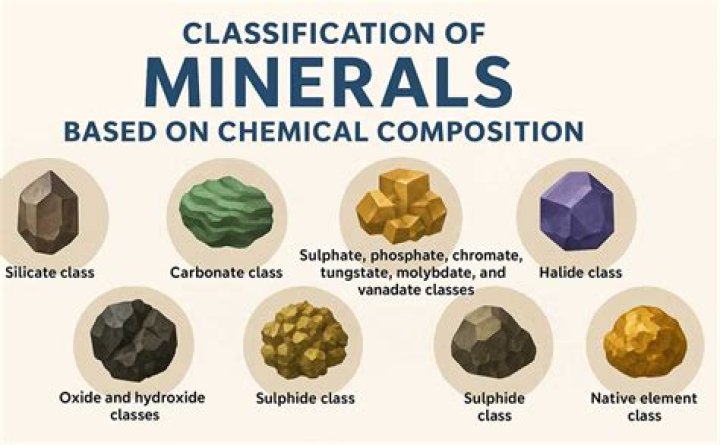
The four main categories of mineral formation are: (1) igneous, or magmatic, in which minerals crystallize from a melt, (2) sedimentary, in which minerals are the result of sedimentation, a process whose raw materials are particles from other rocks that have undergone weathering or erosion, (3) metamorphic, in which …
What is the main process of word formation?
Word formation is the creation of a new word. Common processes of word formation include , eponym formation, blending, backformation and agglutination. Eponym formation is the use of a proper name in a new word, typically an adjective.What are the formation process?
A formation process is any event or situation involving the interactions of humans, surfaces, matter, and the environment that affects the characteristics of the archaeological record (such as its spatial extent, depth, surface expression, or content diversity).
How do you identify word formation?
- Look at the word you have to change. …
- The beginning of the word is often the same and the end of the word changes.
- What form is the new word? …
- Nouns often end: -ment, -ion, -ness, -ity.
- People nouns often end: -er, -or, -ist, -ian.
- Adjectives often end: -able, -ible, -ive, -al, -ic, -ed, -ing.
What is word formation examples?
The English language has a genius for the formation of expressive compound words. Common examples include sun-stroke, pick-pocket, elbow-room, land-lord, humming-bird etc. The two parts of a compound word are usually separated by a hyphen.
What is the importance of knowing the different types of word formation process?
Word formation processes and creation of meanings can occur in very many ways so teachers should learn to incorporate these processes to facilitate learning. For instance, language learners normally use compounding as a way of making new meanings from simpler words (free morphemes).What is word formation process in linguistics?
The word-formation process is the process by which new words are produced either by modification of existing words or by complete innovation, which in turn become a part of the language. We can very quickly understand a new word in our language (a neologism) and accept the use of different forms of that new word.
Which word formation process is the source of English word modem?The word modem comes from the contraction of the words English words modulator and demodulator.
Article first time published onWhat are morphological processes?
The morphological process is the process by which a word is adjusted to conform to a certain context. To put it simply, it is the process of changing the form and function of a word to fit a context, sometimes to the extent of changing the meaning and/or grammatical function.
How are words built or formed?
Many words are built using a combination of linguistic elements, such as prefixes, suffixes, and combining forms. Whereas prefixes and suffixes adjust the sense of a word or its word class, combining forms differ by contributing to the particular meaning of that word.
What are the 10 word formation processes?
They are Page 3 coinage, borrowing, compounding, blending, clipping, backformation, conversion, acronym, derivation, prefix and suffix, and multiple processes.
Is LOL a word formation?
Coleman (2012) notes ‘LOL’, which is an initialism created from the phrase ‘laughing out loud’, as being a good example of a slang initialism. It can either be an abbreviation or an acronym, depending on whether you choose to spell the word out or pronouncing it like words typically are pronounced (Coleman, 2012: 39).
How can the different types of word formation help us in communication?
The word pain is a noun that can be built on to create different word forms e.g. painless, painfully and pains. Developing the use of different word forms helps a child express themselves more clearly and effectively. The use of different word forms helps communication as there is less chance of being misunderstood.
What are the benefits of word formation process?
So word formation increases the importance of language. When a language creates new words, by borrowing for instance, it not only helps maintain that language’s own vitality but also other languages can borrow from the initial language.
What is the difference between back formation and clipping?
Back-formation is different from clipping – back-formation may change the word’s class or meaning, whereas clipping creates shortened words from longer words, but does not change the class or meaning of the word. … Like back-formation, it can produce a new noun or a new verb, but it involves no back-forming.
What is compounding in word formation process?
In English grammar, compounding is the process of combining two words (free morphemes) to create a new word (commonly a noun, verb, or adjective). Also called composition, it is from the Latin for “put together”. … Compounding is the most common type of word-formation in English.
What is morphology and word formation?
In linguistics, morphology (/mɔːrˈfɒlədʒi/) is the study of words, how they are formed, and their relationship to other words in the same language. It analyzes the structure of words and parts of words such as stems, root words, prefixes, and suffixes.
What is an example of a word formation rule morphological process in English?
In English affixation is the primary morphological process in constructing words. For example, the prefix ‘un-‘ attaches to stems in such words as unbelievable or unkind. The suffix ‘-s’ attaches to the end of noun roots to mark plurality as in languages or bugs.
What are the Morphophonemic processes?
Morphophonemic process is the processes which study of the phonological realization of the allomorphs of the morphemes of a language or the study of the phonemic representation of morphemes in different environment. … The term morphophonemic processes is derived from two words, they are “morpheme” and “phoneme”.
How are words built or formed quizlet?
How are words built? They are built and formed by prefixes , suffixes , and combining them.
What are compound words?
When two words are used together to yield a new meaning, a compound is formed. Compound words can be written in three ways: as open compounds (spelled as two words, e.g., ice cream), closed compounds (joined to form a single word, e.g., doorknob), or hyphenated compounds (two words joined by a hyphen, e.g., long-term).
How many new words are created every day?
Currently, there is a new word created every 98 minutes or about 14.7 words per day. For Frequently Asked Questions about the Million Word March and GLM, go here.
What is AFK mean?
Afk means away from keyboard, a phrase that lets others know that you won’t be at your computer for a while. It’s commonly used with another abbreviation—brb (be right back)—to indicate that you’re taking a short break. The term afk developed as a bit of chat room etiquette in the 1990s, when IRC was at its peak.
Who invented laugh out loud?
A former Canadian student named Wayne Pearson claims he coined the phrase in the early to mid 1980s. Pearson says he used it on the now-defunct bulletin board system Viewline. His message was in response to a friend making him truly laugh out loud.
What does XD mean?
an expression used in text messages or e-mails signaling happiness or laughter. XD is an emoticon. X represents closed eyes while D stands for an open mouth.