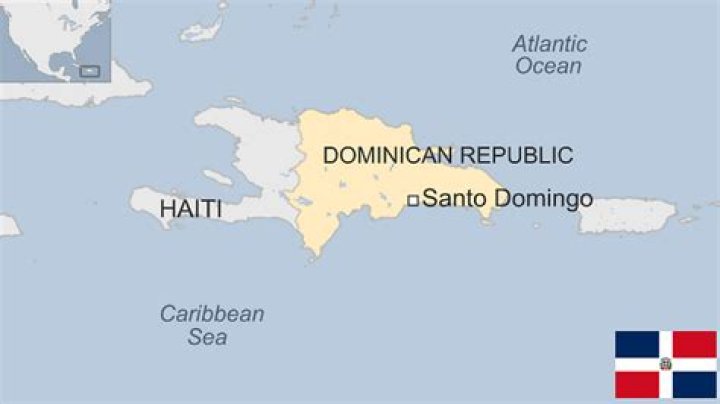
The Good Neighbor Policy allowed the U.S.
Why did FDR establish the Good Neighbor Policy?
Key Takeaways: The Good Neighbor Policy The Good Neighbor Policy was the United States’ approach to foreign policy established in 1933 by President Franklin Roosevelt. Its primary goal was to ensure mutual friendly relations between the U.S. and the nations of Latin America.
Was the Good Neighbor Policy isolationism?
Franklin D. Roosevelt’s “Good Neighbor Policy” was instituted to foster good relations from other countries within the same hemisphere. Foreign policy leaders of the 1930s once again led the country down its well-traveled path of isolationism. …
What was the main point of the Good Neighbor Policy?
The policy’s main principle was that of non-intervention and non-interference in the domestic affairs of Latin America. It also reinforced the idea that the United States would be a “good neighbor” and engage in reciprocal exchanges with Latin American countries.Was the Good Neighbor Policy a success or failure?
The policy’s success was measured in part by the rapidity with which most Latin American states rallied to the Allies during World War II. After the war, however, U.S. anticommunist policies in Europe and Asia led to renewed distrust in the Americas and the gradual lapse of the Good Neighbor Policy.
How and why the Roosevelt Corollary was a policy that the United States used to grow in power economically and militarily?
The Roosevelt Corollary of December 1904 stated that the United States would intervene as a last resort to ensure that other nations in the Western Hemisphere fulfilled their obligations to international creditors, and did not violate the rights of the United States or invite “foreign aggression to the detriment of the …
What was the good neighbor policy quizlet?
The Good Neighbor policy was the foreign policy of the administration of United States President Franklin Roosevelt toward the countries of Latin America. … The Good Neighbor Policy meant that the United States would keep its eye on Latin America in a more peaceful tone.
What was the goal of Roosevelt's Good Neighbor Policy quizlet?
What was the Good Neighbor Policy? A policy of the United States Administration of President Franklin D. Roosevelt during 1933-45, with the goal of strengthening relations with Latin America and hemispheric solidarity against external threats.Why did Roosevelt attempt to appoint six additional justices?
Roosevelt to add more justices to the U.S. Supreme Court in order to obtain favorable rulings regarding New Deal legislation that the Court had ruled unconstitutional. … During Roosevelt’s first term, the Supreme Court struck down several New Deal measures as being unconstitutional.
What was FDR's foreign policy?The 1930s were a high point of isolationism in the United States. The key foreign policy initiative of Roosevelt’s first term was the Good Neighbor Policy, in which the U.S. took a non-interventionist stance in Latin American affairs.
Article first time published onHow did FDR accomplish moving American away from isolationism?
In rejecting Hoover’s approach, FDR essentially embraced a form of economic nationalism and committed the United States to solving the Depression on its own. He scuttled the London Economic Conference in the summer of 1933 and devalued the dollar by removing the United States from the international gold standard.
How did the good neighbor policy differ from the Roosevelt Corollary?
The Roosevelt Corollary applied only to Latin America, while the Good Neighbor policy dealt with Europe. The Good Neighbor policy reaffirmed the U.S. commitment to providing foreign aid to Latin American nations.
What characterizes the conduct of the United States under the Good Neighbor Policy?
The Good Neighbor policy was the foreign policy of the administration of United States President Franklin Roosevelt towards Latin America. … It also declared that American citizens travelling on warring ships travelled at their own risk.
What was fascism quizlet?
Fascism. A system of government characterized by strict social and economic control and a strong, centralized government usually headed by a dictator.
Was the Roosevelt Corollary successful?
Answer and Explanation: In many ways, yes, the Roosevelt Corollary was successful. … As a result, President William Howard Taft built on the success of the Roosevelt Corollary by enacting Dollar Diplomacy, which facilitated American corporations’ economic control in Latin America.
What was Roosevelt foreign policy quizlet?
The policy’s main principle was that of non-intervention and non-interference in the domestic affairs of Latin America. It also reinforced the idea that the United States would be a “good neighbor” and engage in reciprocal exchanges with Latin American countries.
How did Wilson's foreign policy differ from Roosevelt?
Dollar diplomacy and Roosevelt’s big stick diplomacy clashed because of their ideological differences. … Roosevelt was leaning towards social activism while Wilson sought to tweak the system rather than revolutionize it.
What did President Roosevelt do help African American?
In June 1941, Franklin D. Roosevelt issued Executive Order 8802, which created the Fair Employment Practices Committee (FEPC). It was the most important federal move in support of the rights of African Americans between Reconstruction and the Civil Rights Act of 1964.
Why was the episode surrounding the court packing plan significant?
Why was the episode surrounding the “Court-packing” plan significant? It managed a wide array of jobs, became the nation’s largest employer, and included the National Youth Administration. Which of the following factors helped stall the development of the New Deal in the late 1930s? produce cheap electric power.
Why did President Roosevelt authorized the roundup and internment?
Why did President Roosevelt authorize the roundup and internment of all Americans of Japanese descent in 1942? A large number of people believed that Japanese Americans were potential sources of espionage and subversion. … They had private support from U.S. businessmen and tacit support from the Roosevelt administration.
Why did US citizens favor the Lend-Lease Act?
For Roosevelt, Lend-Lease was not motivated primarily by altruism or generosity, but was intended to serve the interest of the United States by helping to defeat Nazi Germany without entering the war outright—at least not until the nation was prepared for it, both militarily and in terms of public opinion.
How did FDR prepare the US for ww2?
President Franklin D. … 5, 1940, FDR began preparing for military involvement by declaring a state of national emergency, increasing the size of the Army and National Guard, and authorizing the Selective Training and Service Act of 1940 — the first peacetime draft in US history.
What policy did Roosevelt advocate for at the Yalta Conference?
At Yalta, Roosevelt secured Stalin’s commitment to enter the war against Japan soon after Germany’s surrender and to establish democratic governments in the nations of eastern Europe occupied by Soviet troops.
What did Roosevelt do during ww2?
Roosevelt supervised the mobilization of the U.S. economy to support the war effort and implemented a Europe first strategy, initiating the Lend-Lease program and making the defeat of Germany first a priority over that of Japan.
What was the main purpose of Roosevelt's Four Freedoms speech?
Roosevelt’s 1941 State of the Union Address, commonly known as the “Four Freedoms” speech. In it he articulated a powerful vision for a world in which all people had freedom of speech and of religion, and freedom from want and fear. It was delivered on January 6, 1941 and it helped change the world.
In what aspect of American foreign policy did Franklin D Roosevelt remove himself from Herbert Hoover's precedent?
In what aspect of American foreign policy did Franklin D. Roosevelt remove himself from Herbert Hoover’s precedent? He formally recognized the Soviet Union in an effort to stimulate trade. Which of the following statements best describes Japan’s overseas actions in the 1930s?
Which president of the USA pursued the good Neighbour policy towards Latin America?
Franklin Roosevelt’s good neighbour policy, coming in the wake of decades of U.S. intervention in Central America, and following a lengthy U.S. military occupation of Nicaragua, marked a significant shift in U.S. policy towards Latin America.
What did Theodore Roosevelt win the Nobel Peace Prize for?
Imperialist and Peace Arbitrator Theodore Roosevelt, President of the USA, received the Peace Prize for having negotiated peace in the Russo-Japanese war in 1904-5. He also resolved a dispute with Mexico by resorting to arbitration as recommended by the peace movement.
How was Roosevelt's foreign policy different from Taft's foreign policy?
How was Taft’s foreign policy different from Roosevelt’s foreign policy? Taft’s policy focused entirely on promoting US business and banking overseas. … For the first time, the United States would police disputes between Latin American and European governments.
What's the difference between fascism and totalitarianism?
Totalitarian states give equal importance to military and economic planning while fascist state gives more importance to military planning than economic. … Totalitarianism holds the authoritative power throughout the state while fascism beholds a great power to control any anti-regime activity.
What are the six aspects of fascism quizlet?
- Powerful and continuing Nationalism. …
- Disdain for recognition of Human Rights. …
- Identification of enemies/scapegoats. …
- Supremacy of the Military. …
- Rampant Sexism. …
- Controlled Mass Media. …
- Obsession with National Security. …
- Religion and Government intertwined.